
English| EUR
Suggested for you
More currencies
Choose a language
Santorini's 76-square-kilometer crescent floats in the Aegean with a permanent population of just 15,500, yet absorbs more than two million visitors each year. The mismatch creates friction: overcrowded sunsets in Oia, hour-long waits for cable cars, and restaurants that serve mediocre food at premium prices because demand never falters. Smart planning turns that friction into margin.
Quick answer
Plan your Santorini visit for late April through early June or mid-September through October to avoid peak summer crowds and secure better accommodation rates. Arrive at popular sites between 08:00 and 10:00, book inter-village transportation in advance, and choose lodging in Pyrgos or Megalochori rather than Fira or Oia to cut costs by 30 to 50 percent while staying close to the caldera views.
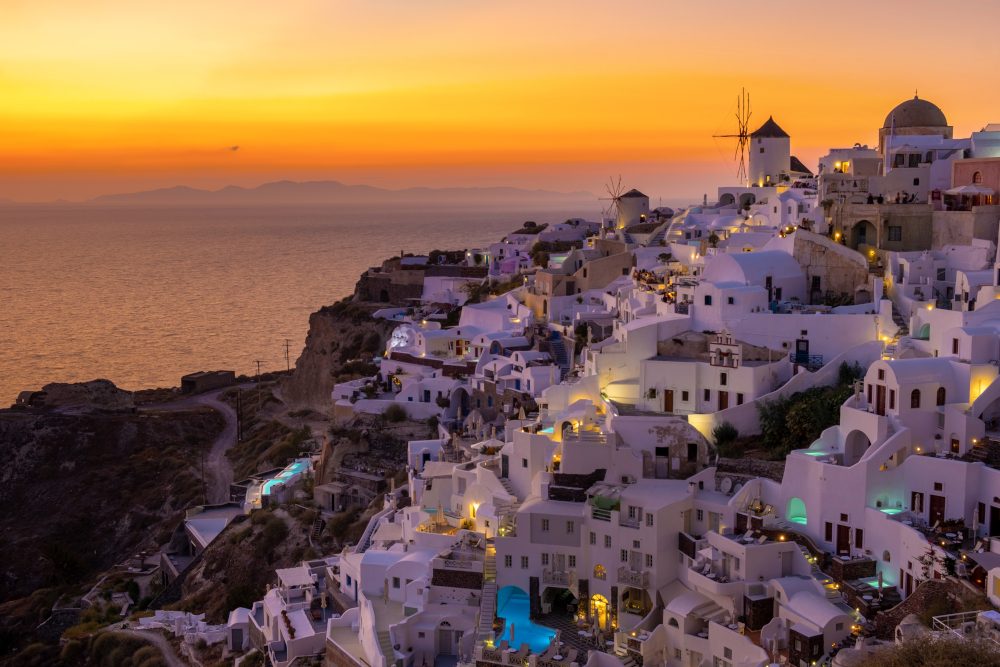
The island's geological drama—a volcanic caldera filled by the sea—creates its signature beauty and its central planning challenge. Most of Santorini's iconic villages cling to the caldera rim, connected by a single narrow road that chokes with traffic between noon and sunset. The island has no rail network, limited public bus service, and taxi availability that evaporates during cruise ship arrivals. Visitors who assume they can move freely between Oia, Fira, and the beaches at Kamari discover otherwise. Understanding the cruise ship calendar reshapes your santorini travel tips strategy. On peak days between May and October, four to six ships dock simultaneously in the old port below Fira, releasing 8,000 to 12,000 passengers into a town built for 2,000. The cable car queues stretch two hours, restaurant tables disappear, and the caldera footpath from Fira to Oia becomes a slow-moving queue rather than a scenic walk. Websites including CruiseMapper publish real-time ship schedules; cross-referencing your dates against the port calendar allows you to reserve low-impact days for Oia's sunset and the archaeological zone at Akrotiri. Accommodation placement matters as much as timing. Fira and Oia command the highest nightly rates—often exceeding 250 EUR in summer—while inland villages like Pyrgos, Megalochori, and Emporio offer equivalent comfort at 100 to 150 EUR with shorter drives to both coasts. Pyrgos sits at the island's highest elevation, offering panoramic caldera views without the Oia markup, and its central position cuts travel time to the east-coast beaches and the southern lighthouse at Akrotiri. Traditional cave houses, carved into volcanic tuff, stay naturally cool even in August, reducing reliance on air conditioning and preserving the quiet that disappears from the caldera rim after dawn. Transportation logistics separate smooth visits from frustrating ones. Renting an ATV or small car costs 25 to 40 EUR per day and grants access to the island's less-trafficked corners: the Red Beach near Akrotiri, the Mesa Pigadia winery inland from Kamari, and the Profitis Ilias monastery at the island's summit. Public buses run hourly between major villages but become unreliable during afternoon peaks and stop entirely by 23:00, stranding diners who linger over meals in Oia. Pre-booking a rental through an off-airport agency in Fira saves 15 to 20 percent compared to airport counters and guarantees vehicle availability during high season. Visiting Santorini with a foundation of realistic expectations and a flexible daily rhythm transforms a checklist scramble into a layered experience of the island's volcanic soils, Assyrtiko vineyards, and clifftop light.
“The island's geological drama creates its signature beauty and its central planning challenge.”
The archaeological site maintains a consistent weekly schedule, with extended evening hours on most days.
The archaeological site of Akrotiri is located on the southwestern edge of Santorini. Access is straightforward via the island's primary road network or the public transit system.
KTEL bus from Fira central station to Akrotiri village
Epar.Od. Firon-Ormou Perissis to Akrotiri
Direct transfer to Akrotiri, Thera 847 00
Private vehicles and buses drop passengers near the designated parking area at Akrotiri, Thera 847 00. Arriving during the best arrival window of 08:00–10:00 minimizes congestion at the site entrance.
Prepare these essentials before your visit to ensure a smooth and comfortable experience.
Navigate Santorini effectively by prioritizing local etiquette and strategic movement throughout the island.
Choose sturdy, closed-toe walking shoes rather than sandals to navigate the uneven volcanic paths and cobblestone alleys safely. Grip is essential for both village exploration and outdoor excursions.
Many pathways in Oia and Fira pass directly through private homes, so keep noise levels low and avoid resting on private walls or stairs. Observing these boundaries preserves the local quality of life.
Carry a reusable bottle and refill it at public taps, as tap water on the island is generally not for drinking. Hydration helps manage the intensity of the Mediterranean sun.
Wear wide-brimmed hats and high-SPF sunscreen even during overcast days, as the reflective white architecture intensifies solar radiation. This prevents heat exhaustion during long days of exploration.
Seek out the southern villages like Pyrgos or Megalochori to experience traditional architecture with fewer visitors than the main caldera settlements. These locations offer a quieter perspective of island life.
Everything you need to know about santorini travel tips
The best arrival window is between 08:00 and 10:00. This helps you avoid the mid-day heat and large cruise ship tour crowds. Effective santorini travel tips often emphasize starting your day early to ensure a comfortable experience at the archaeological site.
To improve your experience, follow these santorini travel tips by visiting during the early morning hours. Arriving before the peak influx of cruise ship passengers allows for a much quieter exploration of the Minoan Bronze Age settlement.
The full individual ticket for archaeological site entry is 20 EUR. Please note that prices are subject to official updates from the Ministry of Culture, and you should check the official site before your visit.
The site is open Monday and Thursday from 08:30 to 15:30. On Tuesday, Wednesday, Friday, Saturday, and Sunday, the site operates from 08:00 to 20:00.
Visiting the ruins is suitable for families and provides an educational look at volcanic history. Essential santorini travel tips for parents include bringing plenty of water, hats, and sunscreen for younger visitors.
Visitors should bring comfortable walking shoes, sun protection, and plenty of water as the site is exposed to the elements. Exploring the Aegean history of this landmark requires preparation for the Mediterranean climate.
Local bus services frequently connect Fira to the Akrotiri village area. Once in the village, the archaeological site is accessible by a short walk or taxi, making it a key component of your Santorini landmarks itinerary.